Solid Wood or Veneer? 5 Quick Tests Before You Buy Used Furniture
Quick answer: Flip the piece over or pull a drawer and look at the back edge of the top. A thin line where the grain changes direction means veneer over a substrate. Continuous grain wrapping the edge, matching weight, and dovetailed drawers point to solid wood. Neither one is automatically better — veneer over solid wood construction can outlast cheap solid wood with poor joinery.
Every week someone tells me they won’t buy “veneer furniture.” I understand the instinct, but it’s the wrong question. Veneer is not a shortcut or a red flag — it’s a thin layer of real wood over a stable base, and manufacturers have used it on museum-quality pieces for over 300 years. The real question is whether the piece was built well, and whether the surface is healthy enough for what you want to do with it.
Here are the five checks I run on every piece before it comes home with me.
1. Check the back edge of the top
Stand behind the piece and look across the back edge where the top meets the side. On veneer, you’ll usually see a thin, distinct line where the surface grain stops and a different-colored substrate begins. On solid wood, the grain continues around the edge uninterrupted.
2. Look for grain that repeats
Veneer sheets are cut from the same log in sequence, so adjacent drawer fronts or side panels often show mirrored or repeating grain patterns — almost like a Rorschach test. Solid wood grain is more random from piece to piece.
3. Pull a drawer and check the sides
Drawer sides and interiors are rarely veneered — manufacturers save the good sheets for visible surfaces. Raw, unfinished solid wood inside a drawer is normal even on a veneered piece. What you’re really evaluating here is drawer construction: dovetail joints, solid wood drawer boxes, and smooth-running sides all signal quality, regardless of what the outer surface is.
4. Weigh it, gently
Try to lift one end. A quality piece, veneer or solid, generally feels substantial for its size because it uses real wood or plywood, not particle board or MDF. Suspiciously light furniture is the actual warning sign — not veneer.
5. Inspect for water damage before you commit to a stain job
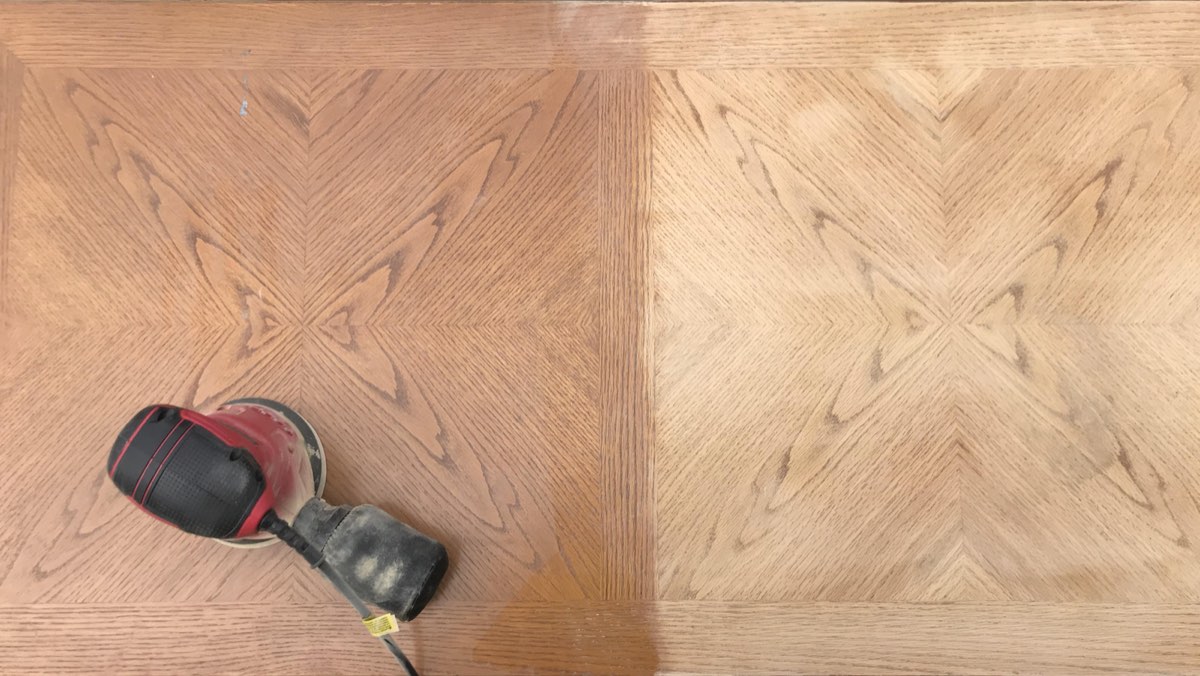
This is the one place veneer changes your plan. If you want a stained, natural-wood top, inspect closely for water rings, bubbling, or lifting. Veneer is thin — often well under a millimeter — so there isn’t much material to sand away if the surface is damaged. If you’re planning to paint the piece, this concern mostly disappears.
Tools We Actually Use
A bright flashlight makes every one of these checks easier at a garage sale or in a dim storage unit. We keep a compact LED flashlight in the car for exactly this. (affiliate link)
Frequently asked questions
Is veneer furniture bad quality?
No. Veneer is a thin layer of real wood over a stable base, used by high-end manufacturers for centuries. Quality depends on construction and condition, not on whether a piece is solid wood or veneer.
How do you tell if furniture is solid wood?
Check the back edge of the top for a visible seam line, look at the grain pattern on adjoining surfaces for continuity, check drawer sides and undersides for unfinished raw wood, and look for consistent weight and joinery like dovetails.
Can you sand and stain veneer furniture?
Yes, carefully. Veneer is typically only a fraction of a millimeter thick, so light grits and a gentle hand are required to avoid sanding through to the substrate below.